
Time to Read:
Table of Contents
Introduction
Customer acquisition gets most of the attention in business growth discussions, but customer retention is where sustainable growth truly happens.
Many companies invest heavily in marketing and sales only to lose customers because of poor onboarding, weak engagement, unresolved support issues, or a lack of perceived value. Every lost customer represents not only lost revenue but also lost acquisition investment.
This is why customer success has become one of the most important functions in modern businesses.
At the same time, customer success teams are under pressure to manage growing customer bases without significantly increasing headcount. Monitoring every account manually becomes impossible as businesses scale.
Artificial intelligence is solving this challenge.
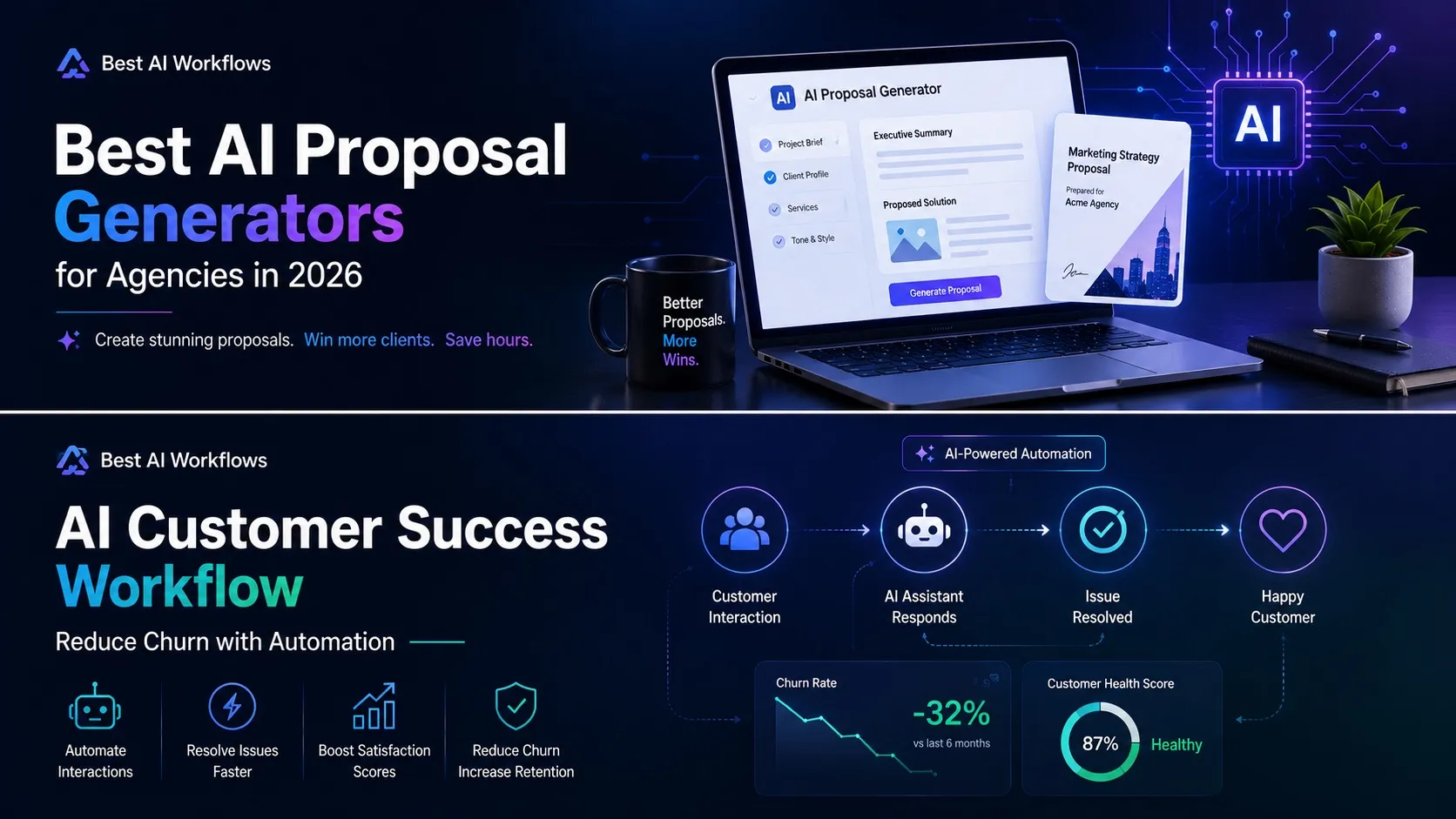
An AI customer success workflow allows businesses to monitor customer health, predict churn risks, automate engagement, and proactively guide customers toward success.
Instead of reacting when customers decide to leave, AI enables teams to identify risks early and take action before churn occurs.
In this guide, you’ll learn how to build a complete AI customer success workflow, the tools required, the metrics to track, and how automation can significantly improve retention and customer lifetime value.
Why Customer Success Matters
Customer success is no longer just a support function.
It directly impacts:
- Customer retention
- Expansion revenue
- Customer satisfaction
- Product adoption
- Customer lifetime value
- Net Revenue Retention (NRR)
- Brand loyalty
Businesses that invest in customer success often achieve higher profitability because retained customers continue generating revenue while acquisition costs remain fixed.
The Cost of Churn
Customer churn affects:
- Revenue growth
- Marketing efficiency
- Sales productivity
- Forecast accuracy
- Customer acquisition ROI
Even small reductions in churn can significantly increase profitability.
This is why churn reduction automation has become a major priority for SaaS companies, agencies, subscription businesses, and service providers.
What Is an AI Customer Success Workflow?
An AI customer success workflow is a structured process that uses artificial intelligence, automation, and customer data to improve customer outcomes throughout the customer lifecycle.
The workflow typically includes:
- Customer onboarding
- Product adoption monitoring
- Health score calculation
- Churn prediction
- Automated engagement
- Customer success interventions
- Renewal management
- Expansion opportunity identification
The goal is simple:
Help customers achieve their desired outcomes while reducing churn and increasing retention.
Benefits of Customer Success Automation
Improved Customer Retention
AI identifies risk signals before customers leave.
Faster Customer Onboarding
Automated onboarding helps customers realize value sooner.
Better Product Adoption
AI recommends relevant features and resources.
Increased Team Productivity
Customer success managers spend less time on repetitive tasks.
Better Customer Experiences
Customers receive timely and personalized support.
Improved Revenue Growth
Higher retention leads to greater customer lifetime value.
Common Reasons Customers Churn
Understanding churn causes is critical before building workflows.
Poor Onboarding
Customers who fail to achieve early success are more likely to leave.
Low Product Adoption
If customers use only a small portion of a product’s capabilities, perceived value declines.
Weak Engagement
Customers who stop interacting with your company become churn risks.
Support Issues
Negative support experiences can quickly damage relationships.
Lack of Value Communication
Customers may not fully understand the benefits they receive.
Competitive Alternatives
Customers constantly evaluate other solutions.
Step-by-Step AI Customer Success Workflow
Step 1: Centralize Customer Data
The foundation of every successful workflow is data.
Customer information should be consolidated from:
- CRM platforms
- Product analytics tools
- Customer support systems
- Billing platforms
- Marketing automation tools
Popular platforms include:
- HubSpot
- Salesforce
- Gainsight
- ChurnZero
- Vitally
Creating a unified customer view enables accurate analysis and automation.
Step 2: Build Customer Health Scores
Health scores help identify customer risk levels.
Factors Included
Product Usage
- Login frequency
- Session duration
- Feature adoption
Engagement
- Email opens
- Webinar attendance
- Community participation
Support Activity
- Ticket volume
- Resolution times
- Satisfaction ratings
Financial Data
- Subscription status
- Payment history
- Contract changes
Health scores typically classify customers as:
- Healthy
- Moderate Risk
- High Risk
- Critical Risk
Step 3: Predict Churn Using AI
AI analyzes historical customer behavior to identify patterns associated with churn.
Churn Signals
- Reduced product usage
- Missed onboarding milestones
- Negative support interactions
- Low engagement
- Payment issues
When risk thresholds are exceeded, workflows activate automatically.
Step 4: Trigger Automated Engagement
Once risks are identified, automated interventions begin.
Educational Campaigns
Triggered when feature adoption declines.
Actions:
- Tutorials
- Knowledge base articles
- Product walkthroughs
Customer Success Check-Ins
Triggered when health scores drop.
Actions:
- Customer success outreach
- Strategy sessions
- Account reviews
Renewal Campaigns
Triggered before contract renewal dates.
Actions:
- ROI reports
- Usage summaries
- Executive reviews
Step 5: Personalize Customer Communication
AI enables personalization at scale.
Instead of generic messaging, customers receive content tailored to:
- Industry
- Business size
- Product usage
- Goals
- Previous interactions
Personalized engagement typically produces higher response rates and stronger retention.
Step 6: Identify Expansion Opportunities
Customer success is not only about preventing churn.
It also helps generate growth.
AI identifies:
- Upsell opportunities
- Cross-sell opportunities
- Expansion readiness
- Product upgrade candidates
These insights help increase revenue from existing customers.
Step 7: Monitor Performance
Every workflow should include performance measurement.
Key Metrics
Customer Churn Rate
Percentage of customers lost.
Customer Retention Rate
Percentage of customers retained.
Customer Lifetime Value (CLV)
Revenue generated throughout the customer relationship.
Net Revenue Retention (NRR)
Measures revenue growth from existing customers.
Product Adoption Rate
Tracks customer engagement with key features.
Health Score Trends
Measures overall customer success performance.
Best Tools for Customer Success Automation
Gainsight
Best for enterprise customer success programs.
Key Features
- Health scoring
- Churn prediction
- Success plans
- Journey tracking
ChurnZero
Best for SaaS businesses.
Key Features
- Customer segmentation
- Real-time alerts
- Automated engagement
Vitally
Best for growing businesses.
Key Features
- Customer health monitoring
- Revenue tracking
- Workflow automation
HubSpot Service Hub
Best for HubSpot users.
Key Features
- Ticket automation
- Customer communication
- Workflow management
Intercom
Best for onboarding and engagement.
Key Features
- AI chat
- Product tours
- In-app messaging
Zendesk AI
Best for support-driven retention.
Key Features
- AI ticket routing
- Automated responses
- Customer analytics
Zapier
Best for no-code workflow automation.
Make
Best for advanced customer success workflows.
Customer Lifecycle Automation Example
A typical AI customer lifecycle automation workflow may look like:
Customer Signup
↓
Welcome Sequence
↓
Onboarding Automation
↓
Product Adoption Monitoring
↓
Health Score Calculation
↓
Risk Detection
↓
Customer Success Outreach
↓
Renewal Management
↓
Expansion Opportunities
This creates a proactive customer success process rather than a reactive one.
Common Mistakes to Avoid
Waiting Until Customers Complain
The best workflows identify risks before customers raise concerns.
Treating All Customers the Same
Different segments require different strategies.
Over-Automating
Human relationships remain critical.
Ignoring Customer Feedback
Surveys and support interactions contain valuable insights.
Focusing Only on Churn
Customer success should also drive growth and expansion.
Frequently Asked Questions
What is an AI customer success workflow?
A workflow that uses AI and automation to improve customer outcomes, reduce churn, and increase retention.
How does customer success automation reduce churn?
By identifying risk signals early and triggering proactive interventions.
Can small businesses use customer success automation?
Yes. Many affordable tools support automation for businesses of all sizes.
What is customer lifecycle automation?
The automation of customer interactions throughout onboarding, adoption, retention, renewal, and expansion.
Which tools are best for customer success teams?
Popular options include Gainsight, ChurnZero, Vitally, HubSpot, Intercom, Zapier, and Make.
Final Verdict
Customer success is no longer optional for businesses that depend on recurring revenue and long-term customer relationships.
An AI customer success workflow enables organizations to identify risks earlier, automate engagement, improve customer experiences, and reduce churn at scale.
Businesses that combine customer success automation with strong human relationships can significantly improve retention, increase customer lifetime value, and drive sustainable growth.
The best approach is to start with health scoring and churn prediction, then gradually expand automation across onboarding, engagement, renewals, and expansion opportunities.