
Time to Read:
Table of Contents
Introduction
Modern sales teams generate more data than ever before, yet many still rely on manual processes that slow down growth. Sales representatives spend valuable hours researching prospects, updating CRM records, writing emails, scheduling meetings, creating proposals, and preparing reports instead of selling.
Artificial intelligence is changing this reality.
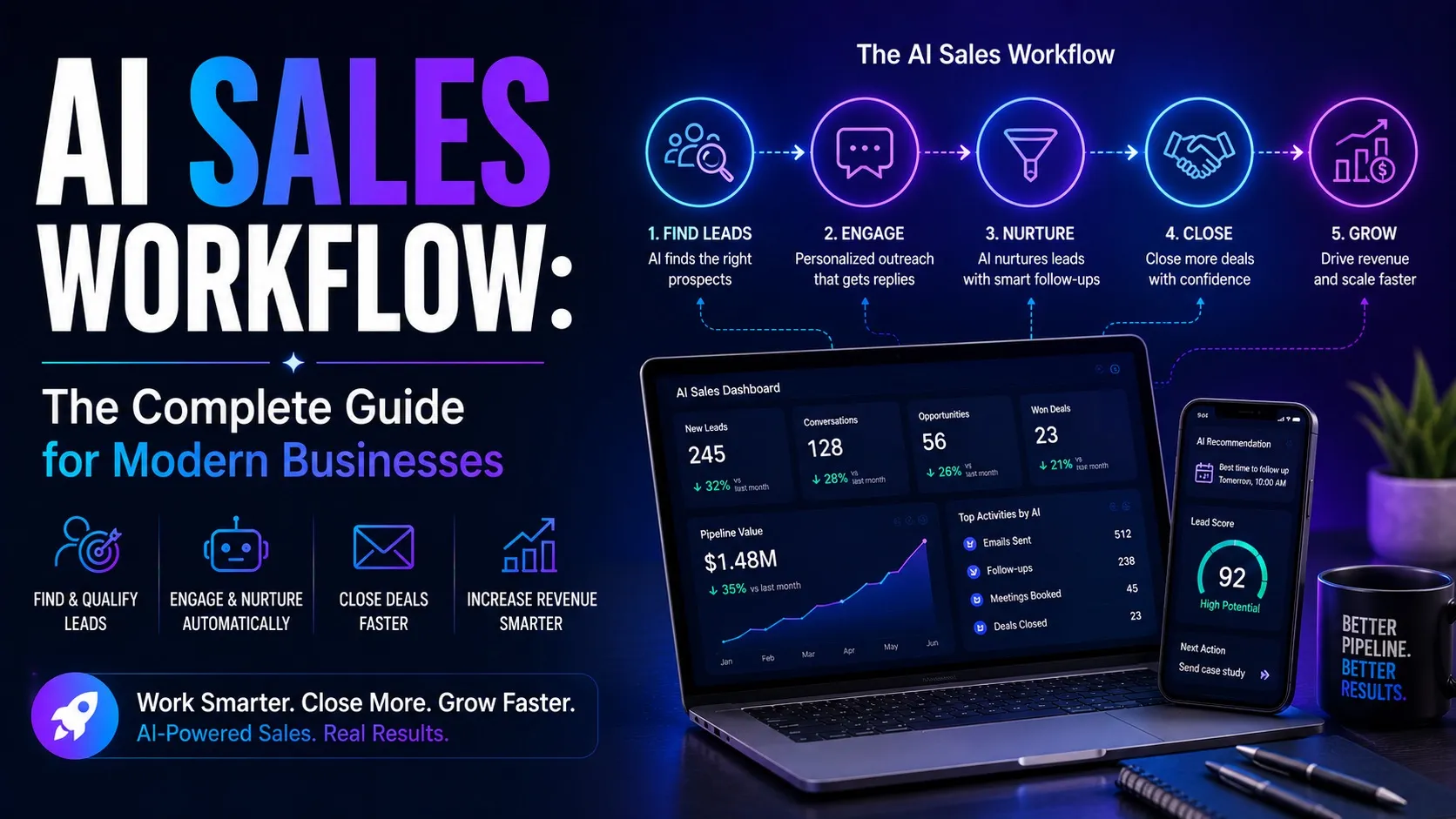
An AI sales workflow connects your CRM, marketing tools, email platform, meeting scheduler, proposal software, and reporting systems into one automated process. AI handles repetitive tasks, identifies high-value opportunities, and delivers actionable insights so sales teams can focus on building relationships and closing deals.
Whether you’re a startup building your first sales process or an enterprise optimizing a complex pipeline, this guide will help you design an AI-powered workflow that improves productivity, shortens sales cycles, and increases revenue.
Why Every Sales Team Needs an AI Workflow
A disconnected sales process creates inefficiencies that reduce productivity and impact revenue.
Common challenges include:
- Manual lead research
- Slow lead qualification
- Inconsistent follow-ups
- Outdated CRM records
- Time-consuming proposal creation
- Limited visibility into pipeline health
- Inaccurate forecasting
An AI sales workflow addresses these issues by automating repetitive tasks while providing real-time insights.
Key Benefits
Save Time
Reduce manual work through automation.
Improve Lead Quality
Focus on prospects most likely to convert.
Increase Sales Productivity
Allow representatives to spend more time selling.
Better Customer Experience
Deliver faster, more personalized communication.
Improved Forecasting
Gain more accurate pipeline and revenue insights.
The Complete AI Sales Workflow
Step 1: Lead Generation
Every sales process begins with finding qualified prospects.
AI-powered lead generation tools identify potential customers using firmographic, behavioral, and intent data.
Recommended Tools
- Apollo.io
- HubSpot Sales Hub
- LinkedIn Sales Navigator
- Clay
- ZoomInfo
Workflow
Website Visitor / Outbound Campaign
↓
Lead Captured
↓
CRM Entry
↓
AI Enrichment
Benefits:
- More qualified leads
- Less manual research
- Improved targeting
Step 2: Lead Qualification
Not every lead deserves immediate attention.
AI scores leads using factors such as:
- Company size
- Industry
- Website activity
- Email engagement
- Purchase intent
- Previous interactions
Recommended Tools
- HubSpot AI Lead Scoring
- Salesforce Einstein
- Apollo.io
- Clay
Outcome
Sales representatives focus on high-priority opportunities instead of manually reviewing every lead.
Step 3: AI-Powered Outreach
Once leads are qualified, AI assists with personalized outreach.
AI Can Generate
- Cold emails
- LinkedIn messages
- Call scripts
- Follow-up emails
- Personalized introductions
Recommended Tools
- ChatGPT
- Claude
- Lavender
- Outreach
- Salesloft
Benefits include:
- Higher reply rates
- Faster campaign creation
- Improved personalization
Step 4: Meeting Scheduling
Scheduling meetings often creates unnecessary delays.
AI integrates calendars and automatically coordinates availability.
Recommended Tools
- Calendly
- HubSpot Meetings
- Google Calendar
- Microsoft Outlook
Workflow:
Qualified Lead
↓
Email CTA
↓
Calendar Link
↓
Meeting Booked
↓
CRM Updated Automatically
Step 5: CRM Automation
Keeping CRM records accurate is critical for forecasting and reporting.
AI automatically updates:
- Contact records
- Meeting notes
- Deal stages
- Tasks
- Activities
Recommended Tools
- HubSpot CRM
- Salesforce
- Zapier
- Make
Benefits:
- Improved data accuracy
- Reduced administrative work
- Better visibility across the sales team
Step 6: Proposal Creation
Proposal creation is one of the most time-consuming parts of the sales cycle.
AI can generate:
- Executive summaries
- Service descriptions
- Pricing explanations
- Project timelines
- Scope documents
Recommended Tools
- Better Proposals
- PandaDoc
- Proposify
- ChatGPT
- Claude
Workflow:
Discovery Complete
↓
Proposal Generated
↓
Internal Approval
↓
Client Delivery
Step 7: Automated Follow-Up
Most deals are not won after a single conversation.
AI ensures consistent follow-up by automatically sending reminders, personalized emails, and nurture campaigns.
Examples
- Day 2: Thank-you email
- Day 5: Case study
- Day 10: Product comparison
- Day 14: Meeting reminder
- Day 21: Final follow-up
Recommended tools:
- Outreach
- Salesloft
- HubSpot
- Zapier
- Make
Step 8: Reporting and Forecasting
AI continuously analyzes sales activity and pipeline performance.
Key Metrics
- Pipeline value
- Win rate
- Average deal size
- Sales cycle length
- Revenue forecast
- Activity levels
Recommended Tools
- Clari
- Gong
- Salesforce Einstein
- HubSpot Reporting
AI helps managers identify bottlenecks and make more accurate revenue predictions.
Example End-to-End AI Sales Workflow
Lead Captured ↓AI Lead Enrichment ↓Lead Scoring ↓Personalized Outreach ↓Meeting Scheduled ↓CRM Updated ↓Discovery Call ↓Proposal Generated ↓Automated Follow-Up ↓Deal Won ↓Reporting DashboardBest AI Tools by Sales Stage
| Sales Stage | Recommended Tools |
| Lead Generation | Apollo.io, Clay, ZoomInfo |
| Qualification | HubSpot AI, Salesforce Einstein |
| Outreach | ChatGPT, Claude, Lavender, Outreach |
| Meetings | Calendly, Fireflies.ai |
| CRM | HubSpot, Salesforce |
| Proposals | Better Proposals, PandaDoc, Proposify |
| Follow-Up | Outreach, Salesloft, Zapier |
| Reporting | Clari, Gong |
Common Mistakes to Avoid
Automating a Broken Process
AI improves workflows but cannot fix poorly designed sales processes.
Ignoring CRM Hygiene
Poor CRM data reduces AI accuracy.
Over-Automating Customer Communication
Personalization remains essential for building trust.
Using Too Many Tools
Choose an integrated technology stack instead of dozens of disconnected applications.
Failing to Measure Performance
Track KPIs regularly to ensure your workflow continues to improve.
Frequently Asked Questions
What is an AI sales workflow?
An AI sales workflow uses artificial intelligence and automation to streamline lead generation, qualification, outreach, CRM updates, proposal creation, follow-up, and reporting.
What is the best AI sales software?
Popular options include HubSpot Sales Hub, Salesforce Sales Cloud, Apollo.io, Gong, ChatGPT, Claude, Outreach, and Make.
Can AI replace sales representatives?
No. AI automates repetitive work, but relationship building, negotiation, and closing deals still require human expertise.
How does AI improve lead generation?
AI analyzes data to identify high-quality prospects and prioritize leads most likely to convert.
Is AI useful for small businesses?
Yes. Many affordable AI tools help small businesses improve productivity without increasing headcount.
Final Verdict
An AI sales workflow is no longer a competitive advantage—it’s becoming the standard for modern sales organizations.
By automating repetitive tasks across the entire sales lifecycle, businesses can increase productivity, improve customer experiences, shorten sales cycles, and generate more predictable revenue.
The most successful approach is to start with one or two high-impact automations, such as lead scoring or CRM updates, then gradually expand into proposal creation, follow-up sequences, forecasting, and reporting.
When implemented correctly, AI enables sales professionals to spend less time on administration and more time building relationships and closing deals.