
Introduction
Running a small business means balancing sales, marketing, customer service, operations, and administration. Many business owners spend more time managing repetitive tasks than focusing on growth.
Artificial intelligence is changing that reality. Modern AI workflows can automate lead generation, customer support, content creation, appointment scheduling, and dozens of other tasks that previously required manual effort.
This guide explores the most effective AI workflows for small businesses, explains how they work, and provides practical examples that can be implemented without a large budget or technical team.
What Are AI Workflows?
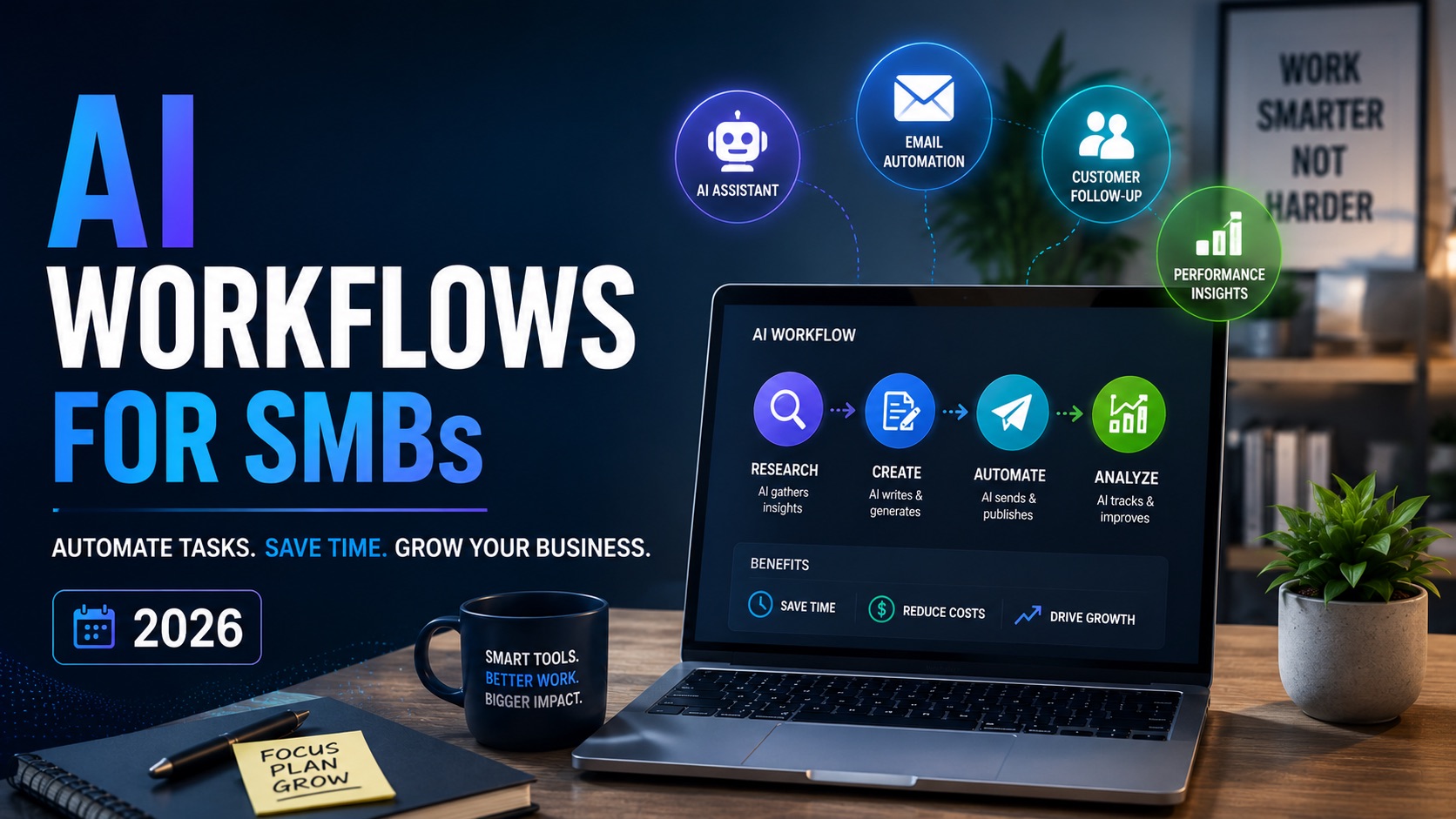
An AI workflow is a series of automated steps that use artificial intelligence to process information, make decisions, generate content, or trigger actions across multiple systems.
Unlike traditional automation, AI can understand language, analyze context, and adapt responses. This makes AI workflows significantly more powerful than simple rule-based automation.
Why Small Businesses Need AI Workflows in 2026
Customer expectations continue to rise while operating costs increase. Small businesses often have limited staff and resources, making efficiency essential.
AI workflows help reduce administrative work, improve customer experiences, increase productivity, and allow businesses to scale without dramatically increasing headcount.
How We Evaluated These Workflows
Each workflow was selected based on its potential impact, ease of implementation, affordability, scalability, and real-world usefulness for small business owners.
12 Best AI Workflows for Small Businesses
AI Lead Generation Workflow
Goal: Capture, qualify, and nurture leads automatically.
Step-by-Step:
1. Visitor submits a form.
2. AI analyzes inquiry intent.
3. Lead score is assigned.
4. CRM is updated automatically.
5. Personalized follow-up email is sent.
6. Appointment booking link is delivered.
Recommended Tools: ChatGPT, HubSpot, Zapier, Calendly.
Benefits: Faster response times, higher conversion rates, reduced manual work.
AI Customer Support Workflow
AI chatbots can answer common questions, create support tickets, and escalate complex issues to human representatives.
Recommended Tools: Intercom, Zendesk, ChatGPT, Make.
Benefits: 24/7 availability, lower support costs, improved customer satisfaction.
AI Email Marketing Workflow
Automatically segment audiences, create campaigns, and personalize communication.
Recommended Tools: ActiveCampaign, Mailchimp, ChatGPT.
Benefits: Better engagement rates, improved conversions, less manual campaign management.
AI Social Media Workflow
Generate posts, create graphics, schedule content, and track performance automatically.
Recommended Tools: Canva, ChatGPT, Buffer, Metricool.
Benefits: Consistent posting and improved brand visibility.
AI Content Creation Workflow
Research keywords, create outlines, draft articles, optimize content, and publish.
Recommended Tools: ChatGPT, Claude, Grammarly.
Benefits: Faster content production and improved marketing efficiency.
AI CRM Management Workflow
Automatically update customer records, track interactions, and trigger follow-up actions.
Recommended Tools: HubSpot, Salesforce, Zapier.
Benefits: Better organization and improved customer relationships.
AI Appointment Booking Workflow
Reduce scheduling friction through automated booking systems.
Recommended Tools: Calendly, Google Calendar, ChatGPT.
Benefits: Fewer scheduling conflicts and improved customer experience.
AI Proposal Generation Workflow
Create professional proposals based on customer requirements.
Recommended Tools: PandaDoc, ChatGPT, Notion AI.
Benefits: Faster sales cycles and more consistent proposals.
AI Review Management Workflow
Collect customer reviews, monitor reputation, and respond automatically.
Recommended Tools: Birdeye, ChatGPT, Zapier.
Benefits: Stronger online presence and improved credibility.
AI Sales Follow-Up Workflow
Maintain communication with prospects through automated personalized follow-ups.
Recommended Tools: HubSpot, Instantly, ChatGPT.
Benefits: Increased conversions and reduced lead leakage.
AI Recruitment Workflow
Automate candidate screening, communication, and interview scheduling.
Recommended Tools: LinkedIn, Notion AI, ChatGPT.
Benefits: Faster hiring and improved candidate experience.
AI Financial Reporting Workflow
Automatically gather financial data, generate reports, and identify trends.
Recommended Tools: QuickBooks, Airtable, ChatGPT.
Benefits: Better decision-making and reduced administrative workload.
Best AI Tools for Building Business Automation Workflows
ChatGPT, Zapier, Make, HubSpot, Airtable, Notion AI, Calendly, ActiveCampaign, and Grammarly are among the most popular tools used to build and support AI-powered business workflows.
Common AI Workflow Mistakes to Avoid
Avoid automating broken processes, using too many tools at once, neglecting human oversight, and failing to measure performance. Start with one workflow, validate results, and scale gradually.
How to Build Your First AI Workflow
Step 1: Identify repetitive tasks.
Step 2: Select a workflow with clear ROI.
Step 3: Choose your tools.
Step 4: Build automation.
Step 5: Test and optimize.
Step 6: Expand once results are proven.
Frequently Asked Questions
What is an AI workflow?
An AI workflow is an automated process that uses artificial intelligence to perform tasks and make decisions.
Which workflow should I start with?
Lead generation and customer support workflows often provide the quickest return on investment.
Do I need coding skills?
No. Most modern AI workflow platforms are designed for no-code users.
How much does implementation cost?
Many workflows can be created using affordable monthly subscriptions.
Are AI workflows secure?
Most leading platforms provide enterprise-grade security and compliance features.
Final Thoughts
AI workflows for small businesses are no longer optional for companies that want to remain competitive. Automating lead generation, customer support, marketing, sales, and operations can save hundreds of hours every year while improving customer experiences and business performance.
The best strategy is to start with a single workflow, measure the results, and gradually expand automation across the organization. Over time, these workflows become a powerful competitive advantage that helps businesses scale more efficiently.