
Introduction
Lead generation is the lifeblood of every business. Unfortunately, many companies still rely on manual prospecting, spreadsheet tracking, and inconsistent follow-up processes that waste time and cause valuable opportunities to slip through the cracks.
Artificial intelligence is changing that. Modern AI-powered lead generation workflows can automatically identify prospects, qualify leads, personalize outreach, update CRM systems, and schedule appointments. Instead of spending hours on repetitive tasks, sales teams can focus on building relationships and closing deals.
This guide explains exactly how to build an AI lead generation workflow, the tools you’ll need, and the steps required to automate your sales pipeline.
What Is an AI Lead Generation Workflow?
An AI lead generation workflow is a sequence of automated actions that uses artificial intelligence to attract, qualify, nurture, and convert prospects.
Rather than relying entirely on manual effort, AI helps businesses identify opportunities, score leads, generate outreach messages, and automate follow-up activities. The result is a faster and more scalable sales process.
Why Businesses Are Adopting AI Lead Generation
Businesses are increasingly adopting AI because buyers expect faster responses and personalized communication. AI workflows help organizations reduce response times, improve lead quality, increase conversion rates, and scale sales operations without dramatically increasing staffing costs.
How We Built This Workflow Framework
This framework is based on proven sales automation principles used by agencies, SaaS companies, consultants, and service businesses. The goal is to create a workflow that can be implemented with no-code tools while delivering measurable ROI.
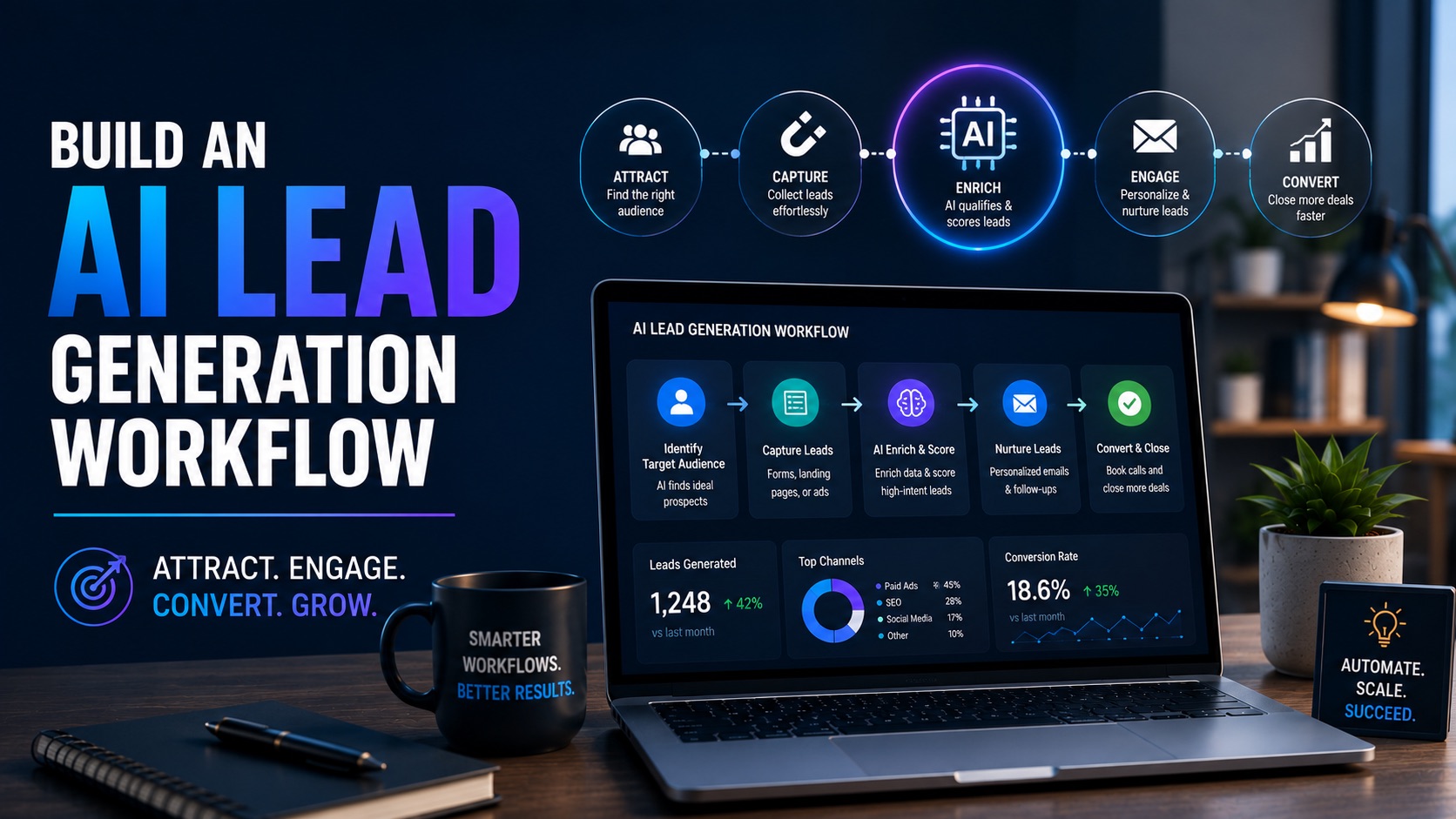
The Complete AI Lead Generation Workflow
Step 1: Capture Leads
Collect prospects through website forms, landing pages, social media campaigns, chatbots, referrals, and paid advertising.
Step 2: Enrich Lead Data
Use AI and enrichment platforms to gather company information, job titles, contact details, and buying signals.
Step 3: Qualify Prospects
Apply AI lead scoring to determine which prospects are most likely to convert.
Step 4: Update the CRM Automatically
Create or update records inside your CRM whenever a new lead enters the system.
Step 5: Generate Personalized Outreach
Use AI to create tailored emails, LinkedIn messages, and follow-up sequences.
Step 6: Automate Follow-Ups
Build nurture sequences that continue engagement until prospects are ready to buy.
Step 7: Book Appointments
Use scheduling tools to automatically offer calendar availability.
Step 8: Track Results
Monitor response rates, conversion rates, and revenue generated from the workflow.
Best Tools for Building an AI Sales Workflow
ChatGPT
Generate prospecting emails, follow-up messages, qualification scripts, and sales content.
HubSpot
Manage contacts, automate sales processes, and track lead activity.
Zapier
Connect apps and automate repetitive tasks without coding.
Make
Create advanced visual automations and workflow logic.
Calendly
Automate appointment scheduling.
Apollo
Find prospects and enrich lead data.
Clay
Combine lead research, enrichment, and AI-powered personalization.
Instantly
Manage cold email campaigns at scale.
AI Prospecting Workflow Example
A prospect visits a landing page and submits a form. The workflow sends the information to a CRM, enriches the profile using lead intelligence tools, scores the lead using AI, generates a personalized email, and automatically sends a scheduling link. Every interaction is tracked and recorded for future optimization.
AI Sales Workflow Example
A sales representative receives AI-ranked leads every morning. The system prioritizes outreach based on buying signals, generates personalized messaging, and automatically schedules follow-ups. This allows sales teams to focus on high-value conversations rather than administrative work.
Common Lead Generation Automation Mistakes
Automating poor-quality prospect lists
Ignoring lead qualification
Sending generic outreach
Over-automating customer communication
Failing to monitor campaign performance
Using too many disconnected tools
How to Measure Success
Track key metrics including:
– Lead response time
– Lead-to-meeting conversion rate
– Cost per lead
– Appointment booking rate
– Sales pipeline growth
– Revenue generated
– Customer acquisition cost
These metrics help determine whether your AI workflow is delivering a positive return on investment.
Benefits of AI Lead Generation Automation
Businesses implementing AI-powered workflows often experience faster response times, improved lead quality, increased sales productivity, more personalized communication, and stronger conversion rates. Automation also reduces repetitive work and allows teams to focus on strategic activities.
Frequently Asked Questions
What is an AI lead generation workflow?
A system that uses AI to automate prospecting, qualification, nurturing, and appointment scheduling.
Do I need coding skills?
No. Most modern workflow tools are designed for no-code users.
Which businesses benefit most?
Agencies, SaaS companies, consultants, local businesses, and service providers can all benefit.
What tools should I start with?
ChatGPT, HubSpot, Zapier, and Calendly provide a strong foundation.
Can AI replace sales teams?
No. AI enhances productivity but does not replace relationship building and sales expertise.
Final Verdict
An AI lead generation workflow is one of the highest-impact automations a business can implement. By automating lead capture, qualification, outreach, follow-ups, and scheduling, companies can create a more efficient and scalable sales process.
The best approach is to start simple. Build a basic workflow, measure results, and expand automation gradually. Over time, these systems can become a significant competitive advantage that drives predictable growth.